
Isolation and loneliness
For the man surrounded by people and still alone.
 OFFICIAL LEGENDARIOS OUTREACH
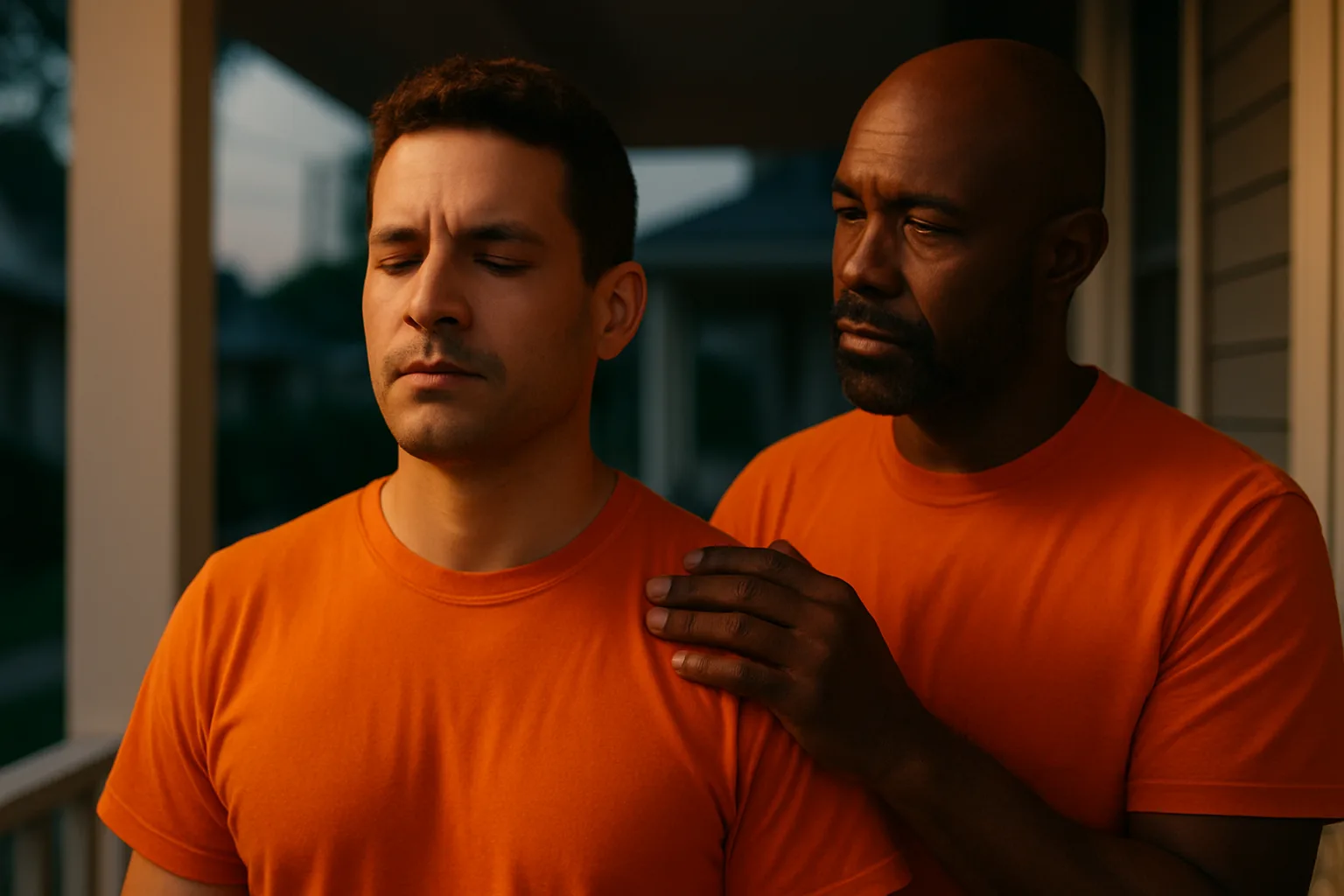
You don't hit anyone. You want that clear. And if you have — once, or more than once — keep reading. This page is for you too, and section 04 is where you start. But you yell. The door slams. The tone comes out — that low, hard voice — and the room changes. You see your daughter's shoulders go up. Your wife goes quiet in a way that isn't peace. Afterward you feel sick, and you promise yourself, and then the next Tuesday it happens again over something that didn't matter.
If you're in crisis: call or text 988 (USA — press 2 or text AYUDA for Spanish) · CVV 188 (Brazil) · Emergency 911 (USA) · 190 / 192 SAMU (Brazil) — this site is not an emergency service.
01 · Not alone
Many of us grew up with fathers who did the same, or worse. We came off the mountain swearing we'd be different. Some of us are different — most of the time. But anger is patient. It waits for the tired day, the money stress, the disrespect that feels like the last straw. And the man who's most ashamed of his anger is often the one who's least able to talk about it.
02 · Alone with it
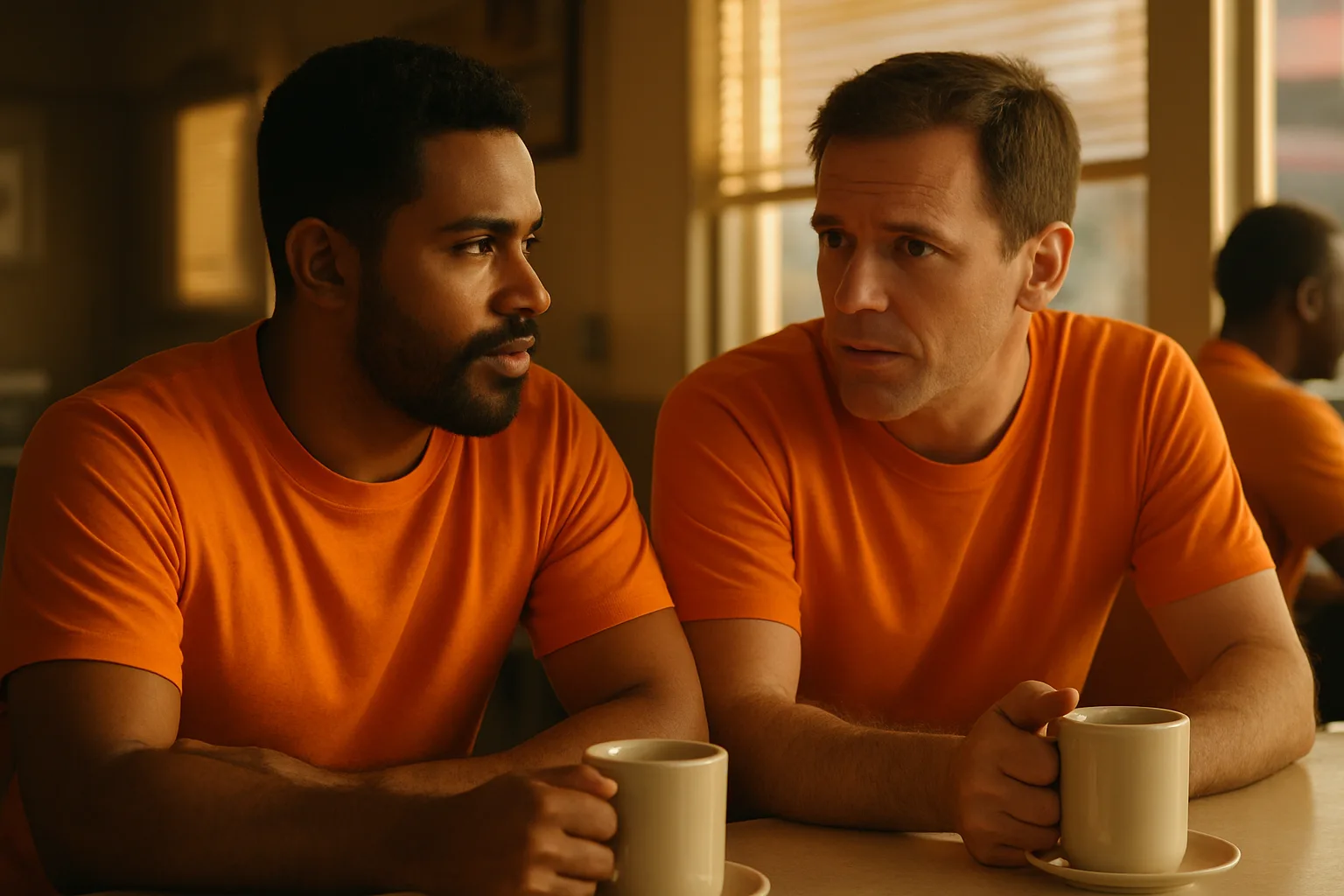
Anger alone justifies itself. The man tells himself he's the only one who takes things seriously, that if people just did what they were supposed to he wouldn't have to raise his voice. He starts to believe that anger is strength and calm is weakness. Meanwhile his kids learn that Dad's love is conditional on the mood, his wife learns to manage him instead of being married to him, and the men around him — if there are any left — learn not to bring up hard things.
He also cuts himself off from God. Not consciously, but a man who just terrified his family doesn't feel like praying. So the shame goes underground, and underground shame turns into more anger. It's a loop, and it doesn't break on its own.
"Everyone should be quick to listen, slow to speak and slow to become angry, because human anger does not produce the righteousness that God desires" (James 1:19–20). Not "never angry." Slow. That's a practice, and practices can be learned.
03 · What a brother does
For one week, every time you blow up, write down three things afterward: what happened, what you were feeling right before (tired? disrespected? scared about money?), and what the person on the other end saw. The pattern will be obvious by day four.
When you feel the heat rise — and you can feel it, there's a half-second — leave the room. Say, "I need five minutes." Walk outside. This is not weakness; it's the strongest thing you'll do all week. Come back and finish the conversation calmly.
Go to the person you yelled at and say what you did, without "but." "I yelled at you over the dishes. That was wrong. I'm sorry." Don't demand forgiveness. Trust rebuilds through repetition, not through one apology.
04 · Getting help
Get a counselor involved if: anyone in your home is afraid of you; you've broken things, punched walls, or gotten physical in any way; the outbursts are frequent and you can't predict them; or you were raised with violence and recognize it in yourself. A licensed counselor who works with men and anger can teach you tools a brother can't. A pastor can walk with you through the shame. Neither is a substitute for the other.
If there has been violence, your wife's and children's safety comes first — before reconciliation, before appearances, before your feelings. We will never push a family to stay in a room where they're afraid. Get help now, and let the professionals lead. USA: National Domestic Violence Hotline 1-800-799-7233, or text START to 88788. Brazil: Ligue 180.
You don't have to have it figured out to write. Say where you are and what you're carrying; one brother reads it and answers. No script, no forwarding, no group chat. Write to us →
If you're in crisis: call or text 988 (USA) · CVV 188 (Brazil) · Emergency 911 / 190.
Also common
For the man surrounded by people and still alone.

For the man going through the motions after the fire went out.
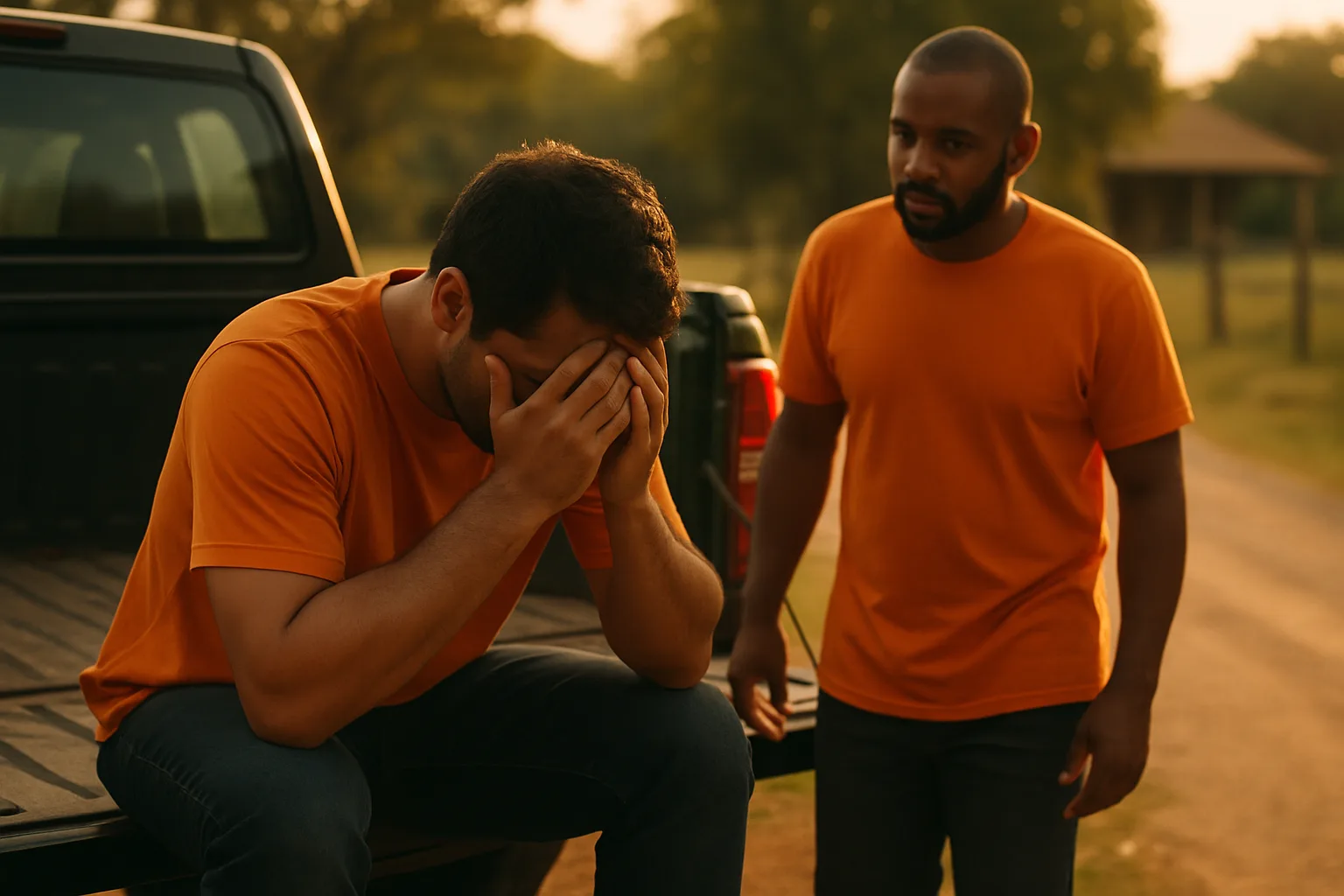
For the man whose mind won't shut off at 3 a.m.
The whole ask
Say where you are and what you feel like trying first. A real brother answers, not a robot. E-mail is the only channel we use.
hello@afterthetop.comNo forms, no phone, no messaging apps. One e-mail, one brother, one answer.
Escreva em português — respondemos no seu idioma. Escribe en español — respondemos en tu idioma.